Monthly Review Press

The World We Wish to See reviewed by ANTI-IMPERIALISM.ORG

The World We Wish to See reviewed by ANTI-IMPERIALISM.ORG

“What to do?" A short question with a very complex answer. In The World We Wish to See, Samir Amin delves into the contemporary political conjuncture with a succinctness and ease that belies the monuments scope of the topic he addresses—how do counter-hegemonic movements find convergence in diversity, in an age when political lines are being redrawn and new issues are being raised, daily, hourly?

Revolutionary African Perspectives presents Gerald Horne in a 5-part radio WRFG interview

Revolutionary African Perspectives presents Gerald Horne in a 5-part radio WRFG interview

Nyeusi U. Jami, host of Revolutionary African Perspectives (WRFG 89.3 FM, Atlanta), talks with Gerald Horne in a four-part interview, about his recent book, The Apocalypse of Settler Colonialism: The Roots of Slavery, White Supremacy, and Capitalism in Seventeenth-Century North America and the Caribbean. In part five, the conversation turns to matters involving Dr. Horne’s 2014 book, Race to Revolution: The U.S. and Cuba during Slavery and Jim Crow

Rethinking Democracy, SR 2018 reviewed by Counterfire

Rethinking Democracy, SR 2018 reviewed by Counterfire

This latest addition to one of the most prestigious journals on the left is a timely examination of the relationship between socialism and democracy. Decades of Stalinist distortion in Eastern Europe still leave a residual notion in the minds of many that these two concepts are, in fact, antithetical. Throughout the era of the cold war, the Western states propagated the related idea that only capitalism was capable of securing the individual freedoms that are synonymous with the idea of democracy….

ResoluteReader reviews Gerald Horne’s The Apocalypse of Settler Colonialism

ResoluteReader reviews Gerald Horne’s The Apocalypse of Settler Colonialism

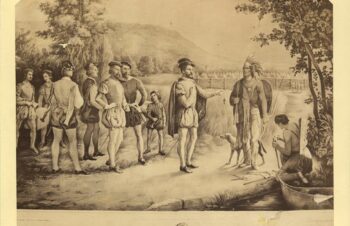
In the introduction to his latest book historian Gerald Horne makes clear the consequences of European settlement in the Americas:
"Though disease spread by these interlopers is often trotted out to explain the spectacular downturn in the fortunes of indigenous Americans, genocide – in virtually every meaning of the term, including volitional acts by invading settlers – is the proximate cause of this towering mountain of cadavers. Thus, even when enslaved Africans chose suicide, which they were often forced to do, it would be follow to suggest that enslavers were guiltless...."

New! Culture as Politics: Selected Writings of Christopher Caudwell

New! Culture as Politics: Selected Writings of Christopher Caudwell

Considered by many to be the most innovative British Marxist writer of the twentieth century, Christopher Caudwell was killed in the Spanish Civil War at the age of 29. Although already a published writer of aeronautic texts and crime fiction, he was practically unknown to the public until reviews appeared of Illusion and Reality: A Study of the Sources of Poetry, which was published just after his death. A strikingly original study of poetry’s role, it explained in clear language how the organizing of emotion in society plays a part in social change and development. Culture as Politics introduces Caudwell’s work through his most accessible and relevant writing. Material is drawn from Illusion and Reality, Studies in a Dying Culture, and his essay, “Heredity and Development.”

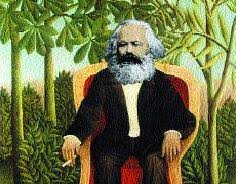
Socialist Review considers Karl Marx’s Ecosocialism

Socialist Review considers Karl Marx’s Ecosocialism

This fascinating book builds on the work of Marxists such as John Bellamy Foster to argue that Karl Marx’s thought is central to understanding that humanity’s destruction of the planet is due to the capitalist mode of production. It is a further blow against the perception that Marx was a naive Promethean—someone who believed that simply increasing production will solve all humanity’s ills and that therefore Marxism has nothing to say about ecological crisis....

“The militarized identity politics that was ‘whiteness’”: Marxism-Leninism Today on The Apocalypse of Settler Colonialism

“The militarized identity politics that was ‘whiteness’”: Marxism-Leninism Today on The Apocalypse of Settler Colonialism

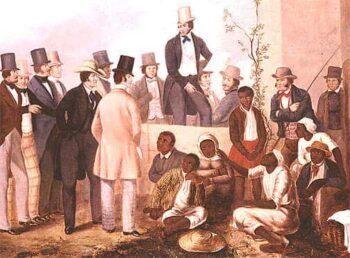
Gerald Horne introduces his book about 17th century English colonial aggression in the Caribbean and North America by mentioning a three-part ‘Apocalypse.’ He indicates that its ‘three horsemen’—slavery, capitalism, and white supremacy—were present and sowing grief at the formation of the United States. But the first two play only supporting roles in his narrative. They give rise to conflicts and crises that provoke white supremacy, his third protagonist, into existence….