Monthly Review Press

“Voices of Latin America,” post–pink tide (Science & Society)

“Voices of Latin America,” post–pink tide (Science & Society)

"....almost half the book comes in the form of substantive interviews that are not simply rich and compelling in the sense of capturing the struggles and experiences of a diverse range of Latin Americans. They are also incredibly smart. The researchers interviewed some really sharp, experienced activists who have clearly thought deeply about political struggle for some time."

“The Lie of Global Prosperity” as a work of popular education (Science & Society)

“The Lie of Global Prosperity” as a work of popular education (Science & Society)

"Donnelly gives a short account of the origins of neoliberal imperialism, which emerged in the 1970s as a result of three challenges to the post–World War II global economic order: 1) the decline in the value of the U. S. dollar; 2) economic stagnation and a falling rate of pro t in the rich countries; and 3) the Third World “debt crisis”. Donnelly’s retelling of this story is remarkably concise and coherent; captured in a mere 30 pages, it is perhaps one of the best short overviews of the emergence of neoliberal global capitalism that I have read...."

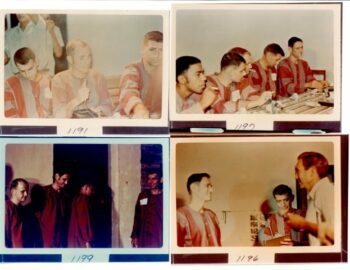
Why the sudden interest in Vietnam era movies? Coauthor of “Dissenting POWs” weighs in

Why the sudden interest in Vietnam era movies? Coauthor of “Dissenting POWs” weighs in

"'Why do we go back?' she asked sardonically, 'because they go back,' the pro-war hawks and military establishment. The 'patriarchy,' as she put it, ruminates the defeat in Vietnam like a bad sandwich growling in its stomach through a night that will not end. The defeat in Vietnam struck at a pillar of American manhood. Vietnam veterans would sometimes be chided by older veterans: they had won their war; Vietnam veterans had lost—what kind of men were they?"

Horne on the true source of Chauvin’s crimes (Listen: The Analysis)

Horne on the true source of Chauvin’s crimes (Listen: The Analysis)

"The bargain was that if they worked together, they could expropriate the land from the Native Americans and accomplish what came to be called the American Dream, and with a little luck and a lot of pluck, they could then somehow down the road gain free labor from enslaved Africans, and so there was a sort of corrupt bargain at the onset of what is now the United States of America...And still to this very day, you have this kind of class collaboration between some of the ninety-nine percent and some of the one percent. How else can you explain how and why a faux billionaire, Donald J. Trump in November 2020, received almost seventy-five million votes?"

Extraordinary Achievements: Don Fitz’ “Cuban Health Care”

Extraordinary Achievements: Don Fitz’ “Cuban Health Care”

Comparing the health systems of Cuba and the United States, Don Fitz' book "Cuban Health Care" presents a startling statistic: The cost of healthcare per person in Cuba is one twentieth that of the US. "Why?" Peter Arkell asks, and Fitz answers: “Poor countries simply cannot afford such an inefficient health system"...

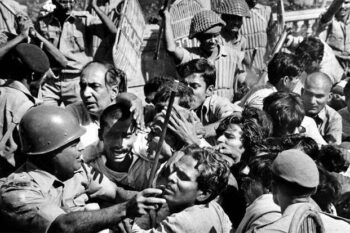
Patnaik on Neoliberalism to Neofascism (Listen: Alternative Radio)

Patnaik on Neoliberalism to Neofascism (Listen: Alternative Radio)

From Modi’s India to Erdogan’s Turkey neofascist autocratic regimes have taken hold...The result: widespread immiseration and discontent. In its wake, demagogues exploit the situation. They are coming to power by scapegoating, instigating violence against minorities, coupled with loud calls for 'getting our country back,' and lots of flag waving...

Reason for common cause: A review of “The Robbery of Nature,” from Against the Current

Reason for common cause: A review of “The Robbery of Nature,” from Against the Current

"Foster and Clark show that the exploitation of wage labor in the capitalist production process is essentially tied to the expropriation of the natural world, the refusal to socially acknowledge care labor as socially necessary labor, the privatization of our common cultural heritage, the treatment of non-white communities as places where the social pathologies of capitalism (unemployment, poverty, and so on) can be concentrated, and so on. From this perspective workers, environmentalists, feminists, community activists, and anti-racists have good reason to make common cause."